Showing posts with label France.. Show all posts

Saturday, May 4, 2013

Sunchokes: Jerusalem Artichokes, growing and eating them

Sunchokes: Jerusalem Artichokes, growing and eating them.
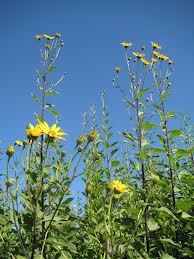
image credit urban artichoke. com

it is now late spring and the Jerusalem artichokes are poking out from under late snows, the old mulch has melted into fertile cover and keeps weeds from showing up. I am still eating some of the roots, plants are ready for summer shade and shine..they look so perky in yellow crowns on my kitchen table.

Just as a child with a sunny disposition can bring joy in the house, the sunchoke plant is a source of moments of happiness in the garden. From spring buds to tall spikes blooming bright yellow above one's head, there are many stages and uses for this humble vegetable. Easy to plant and to nurture; no fuss, or fertilizer, add a little neglect, some water by its feet in dry summer makes the morning happy time..it offers nutritional benefits as well as sheltering properties.

Plant against a wall and find the temperatures drop within the dwelling. Put a few tubers 4 inches into any well drained soil and reap a free crop, sunchokes are prolific. A perennial resurgence of this abundant food source makes it convenient as bean stalks or permaculture favorite. A few small tubers in winter or spring in a sad corner and a fiesta of small sunflower heads by August. To hide compost bins, to soften the wind on prized flowers. Harvest by October onward, the tubers stay underground under 2-4 inches of any mulch all winter-long; a fresh meal at the ready, lift mulch, dig out tubers, leave the rest under leaves, straw, coffee grounds and eggshells for later.

Cooking sunchokes is like preparing potatoes: clean with brush and running water, boil till tender(approx 15 minutes) water will turn a bluish-green color.
Baking is tastier as flavors are concentrated, put them in roasting pan, spray with a little olive oil, add sea salt. Bake for 30-45 minutes at 375 That's all. Carrots and celery make great roasting companions for the small tubers.

Mashed sunchokes are tender treats, depending on texture preferences, you may wish to use a blender on small burst of pulse, till peels have disappeared add a beaten egg and dash of milk and sourcream the creamy substance. Again carrots and parsnips make great additives to this dish. Sprinkle with parmesan, or gruyere, parsley flakes, turmeric and garlic powder.

There is a hint of fennel subliminal aroma to the sunchoke, close your eyes and search for the food memory bank to sort out this delicate perfume, is it licorice? Is it celery like? The unique savor is intriguing especially when stir-fried with other root vegetables. Add a dash of soya sauce or sesame oil.
image credit urban artichoke.com
I must add that topinambours or topines as these are called in France are not always welcome to the table; the farm wife next door explained to us that they had eaten so many of them during the war, she never wanted them to come inside her kitchen—in any form- not even in a bouquet. “ non merci! These are for the rabbits”.

I like rabbit food, so I appreciate such delicacies as a salad of grated sunchokes with dressing of mayonnaise, Dijon mustard , wine vinegar and grape-seed oil. Sea salt and pepper to taste. Serve alone or add to tuna salad, potato salad or green salad, it tastes nutty and crunchy.

For a quick snack, slice sunchokes thinly, and make a dip out of sourcream, crushed bean or humus, green onion, parsley leaves and celery leaves chopped very small. Sea salt and pepper, perhaps some curry spice or garlic powder if preferred.

The tubers hold anti-diabetic properties as they contain inulin ( not insulin) the digestive qualities of this root vegetable make it a must for the table of the conscious gourmet, it is economic to grow; why not plant just a few in a sunny location or partial shade and watch it thrive. 

www.urbanartichokes.com will take you to delectable imagery, the word sunchokes evokes many a dish and myriad blooms of heliantis, the sun flower. 


Saturday, February 4, 2012

Close To The Dirt

Walking alongside roads, collecting aluminum cans, we were doing our civic duty, keeping the countryside beautiful. More likely we were finding metal to recycle for a few dollars, practicing
economy and ecology as entertainment. For myself, no conflict arises out of recycling.

I was born in Normandy, the birthplace of northern frugality. Then to retrace the ecological roots of culture, my paternal ancestors would assert that the southern French were born with dirt in their genes. Soil holds the evidence of everything. Water is the fluid vehicle of all effluence; and air? I prefer not to see it or taste it.

I was raised in the South-West of France, school-year in the city and every vacation spent in my ancestral village. Surrounding woods were rife with mushrooms, fruits and berries. I later followed a different personal path through deserts and prairies across the sea. Mother, the Normand, never understood my preference for the countryside; mud afoot, long workdays, snakes and bugs were not 'her' idea of pleasure. By default and isolation I became an accidental poet and a compulsive gardener under various conditions and climates.

I now live in the land of too much milk and not enough honey. Cows are fat with hormones, bees are dying, and milk makes no butter-cream. Honey is expensive and fruits largely tasteless. I found an ancient tree in town which produces delicious crunchy apples. Amish fruit stands full of organic goodies dot the highways in good weather.. Meadows and ditches are replete with edible plants. Fallen trees provide free fodder for the wood stove... Now venison and turkey are the last abundant offering, though catfish and bass rank highly as well in private ponds, to avoid river pollutants..

All is not yet lost; counties are too poor to spray herbicides on roadsides. Abandonment has preserved a few elderberry bushes about town, gnarly trees keep on producing pears and persimmons despite owner's obvious carelessness. Birds congregate in the tall walnut trees, watching the climatic effects upon insect populations provides unbiased windows into a near future. No matter the circumstance, it is the single gesture, the individual thought which restores balance in the larger world. A small measure of neglect can be instrumental in conserving nature.

With businesses closing down and the tax-base eroding, prices have surged everywhere. Our own lifestyle resembles that of pioneers, though not always by choice. Knowledge gathered across cultural divides, accumulated as insurance against inevitable adversity. I remain close to the dirt; i don't mean the fingernail and muddy toes kind of contact, but an ongoing respect for natural principles. That which comes from the ground shall return to the ground-sort of continuum... The rest is waste...and I have made that a lifelong project—to refuse as much as possible -- to re-purpose creatively-- and--to use everything to its natural conclusion.

And the ground wins! despite the general lack of interest in learning about the effects of human habits upon the environment at large. There is an ascetic pleasure in minimalism, to use little, to throw little, what a passion i feel in the art of conservation. Oh yes art, because a well spent day is an art form. A well planned meal eaten around a common table is basically sharing the fruits of the soil (and I don't mean cocoa puffs scarfed hastily at the kitchen counter). Finding reasons to live along natural ways and disseminating what we find there to save ourselves from commercial encroachment (emphasis on what can be done at home) or anywhere you are.

Winter has saturated the clay and fields are swelling with my favorite greens, a cure is in the air, it's free and it's good for me, now, is that pleasure or survival? All I can do is to protect myself with the natural antidotes to chemical assaults committed by corporate zeal, (in my cantankerous consumer name). Dandelions and mushrooms, berries and kale, seaweed grown in unpolluted gulfs, one texture after another, i taste rich and healthful abundance.

Now, on to composting ideas and gathering joy; i have friends waiting for tips and recipes or scientific reports about energy development. And I have blogs to read for more organic discoveries, most of all, for positive news to spread.

Enough about the writer and forward to the writing and reading!, ns